Motor Control
Voluntary movement is, effectively, the result of a series of complex sensorimotor transformations which ultimately result in the contraction of skeletal muscle.
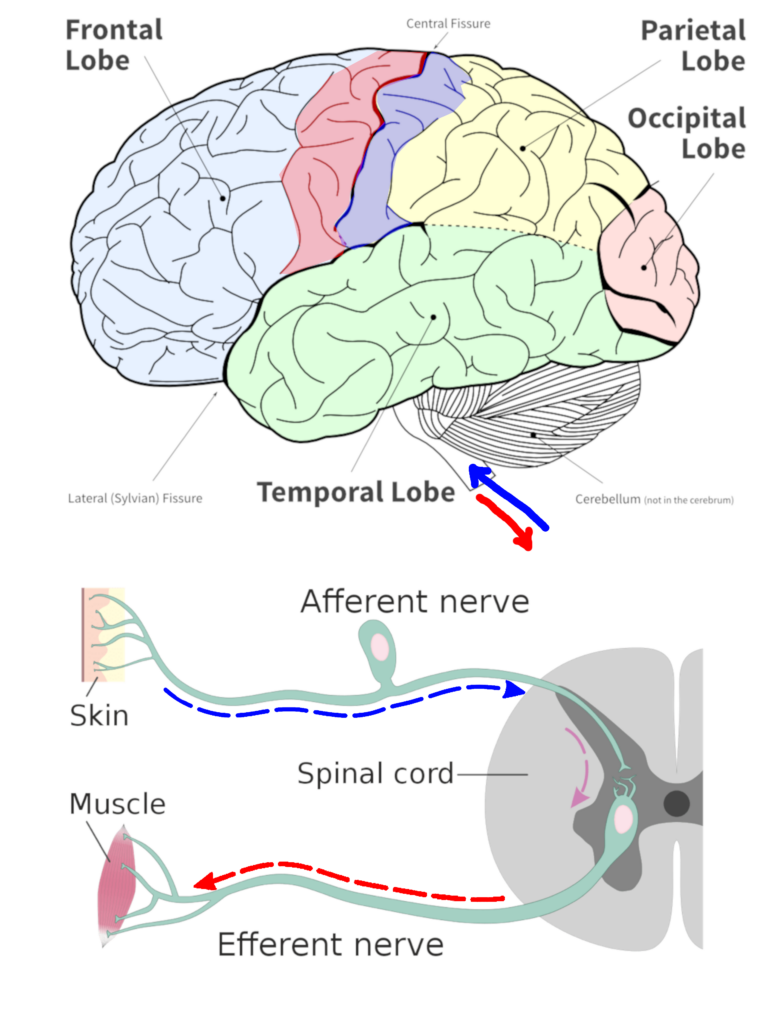
This process is initiated as incoming sensory information such as sight, sound, smell, taste, or touch are relayed into the central nervous system (i.e. brain) where they initiate a cascade of neural activity throughout various brain networks.
Over the course of milliseconds, this widespread neural activity is shaped by preceding neural activity as well as the individual neural architecture to eventually converge at the motor cortex before once again descending to the spinal cord and then to the muscles involved in volitional movement.
In this sense, motor control can be considered a sort of continuous feedback loop whereby movement results in sensation which shapes movement, resulting in sensation, and so on and so on and so on…